RootedWisdom
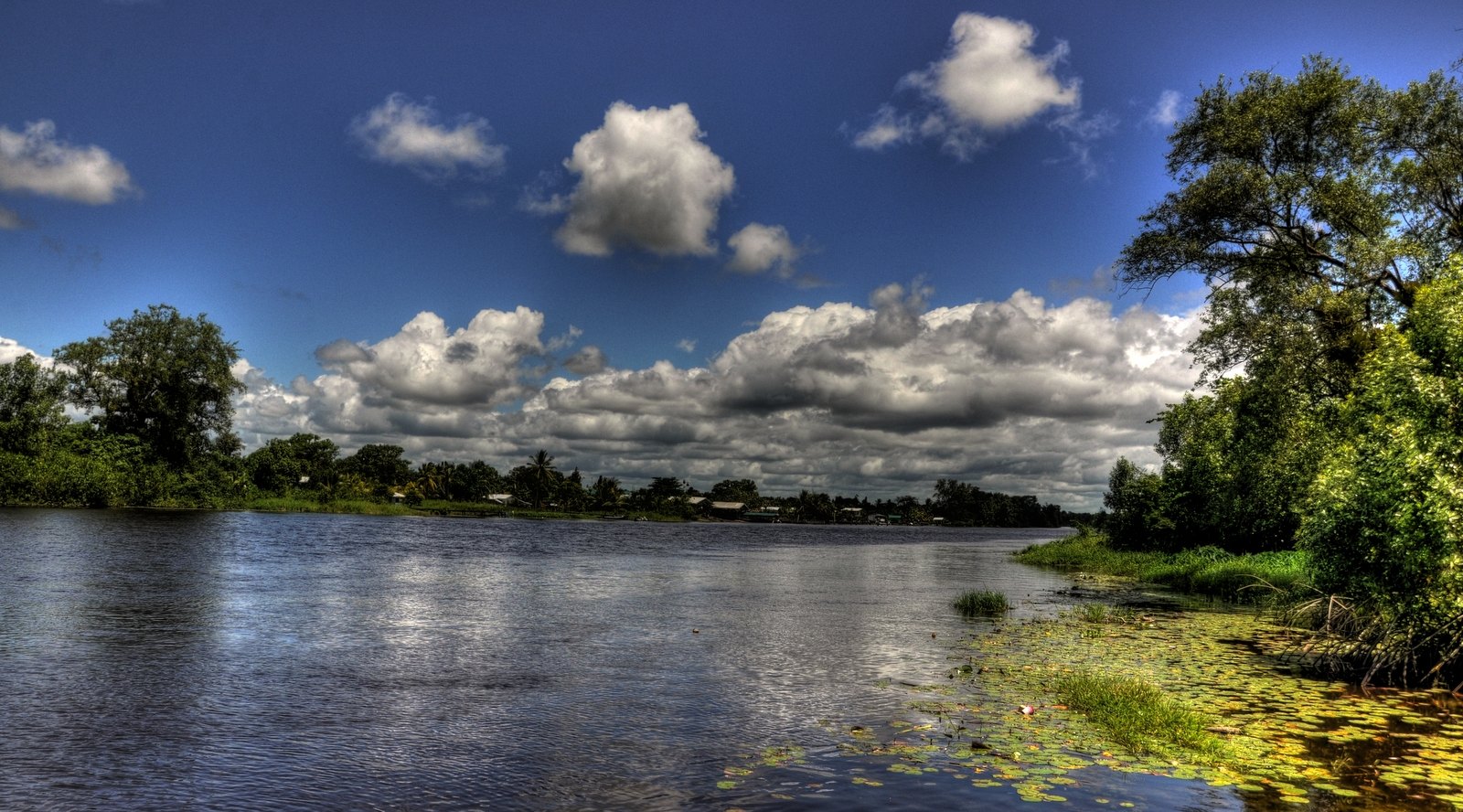
The Pomeroon River in Guyana under a wide sky - river country at the heart of Lokono homeland

Atlas / Guianas, northern coast of South America

The Lokono of the Guianas

Self-designationLokono - 'the people'; their language is Lokono Dian, 'the people's speech'. 'Arawak' was the name Europeans recorded for them from the early 1500s, and the name scholarship later gave their entire language family
HomelandThe river and coastal country between the Orinoco and the Oiapoque: Guyana, Suriname, French Guiana and the Venezuelan Guayana - a waterworld of cassava fields, creeks and mound villages
LanguageLokono Dian, the eponymous language of the Arawakan family - in the classification of Alexandra Aikhenvald, a leading linguist of Amazonian languages, the most geographically widespread language family of pre-contact South America. Critically endangered: about 2,500 people still speak it, most of them semi-fluent

Header image: The Pomeroon River, Guyana - water country the Lokono have travelled, fished and farmed for centuries; the village of Kabakaburi stands on its banks - Marco Farouk Basir via Wikimedia Commons, CC BY-SA 3.0

A documented history

The Arawakan languages likely grew up in the Orinoco River valley and spread with migrating speakers until the family was the most extensive in the region at European contact. The branch that settled the Guianese coast and river valleys - today's Guyana, Suriname, French Guiana and beyond - is the people Europeans wrote down as Arawak, Arwacca, Arowak, Allouagues, in records that run from the early 1500s.

  1. c. 3000 BCThe oldest dated material at the Berbice sites - radiocarbon dates of about 5,000 BP (years before present, the dating convention) from the dark-earth midden - an ancient refuse mound whose soil people enriched over generations - alongside raised fields and ceramics the excavators tentatively link to the Lokono. Dating was still incomplete when reported; the excavators argue the site may be among the oldest settled agricultural landscapes in Amazonia.
  2. early 1500sEuropean records name the coastal people 'Arawak' - Arwacca, Arowak, Allouagues. The family of languages will later take its name from them.
  3. 1500sSpain overruns the islands but cannot subdue the mainland Lokono through the entire century.
  4. early 1600sFacing new European powers, the Lokono ally and trade with Spain against the Kalina, their neighbors to the east, who side with the English and Dutch. Trade brings prosperity.
  5. 1627English colonists persuade a Lokono family to move to Barbados to help establish the colony's farming.
  6. 18th centuryJeptha, a Lokono translator aided by two boys, renders the Bible and German hymns into Lokono.
  7. 19th centuryThe end of the plantation economy collapses the coastal trade; the Lokono population declines.
  8. 1989John Peter Bennett publishes An Arawak-English Dictionary - a Lokono scholar writing his own language into the record.
  9. 2009-2011George Simon co-leads professional excavations of the Berbice Mounds with the Universities of Guyana, Florida and Wisconsin: anthropogenic soils, raised fields, ritual mounds.
  10. 2019The Fédération Lokono de Guyane begins community language workshops - speakers, linguists and youth relearning Lokono Dian together.

Where the Spanish overran the islands, the mainland Lokono held. Through the whole sixteenth century Spain could not subdue them; in the early seventeenth, facing new European rivals, the Lokono allied and traded with the Spanish against the Kalina, their neighbors to the east, who had allied with the English and Dutch. Trade brought a long prosperity. In 1627 English colonists persuaded a Lokono family to cross to Barbados to teach the new colony farming.

The nineteenth century broke the arrangement: the end of the plantation economy gutted the coastal trade, and the population fell. In the twentieth, families supplemented farming with fish, lumber and migrant labour, and the numbers began to climb again - about 10,000 Lokono today, with thousands more of Lokono ancestry. In the 1950s Lokono families resettled western French Guiana at Balaté, Washiba and Ywa; in the 1980s, Suriname's civil war pushed a diaspora into Guyane.

A way of knowing

Lokono society was matrilineal - descent and belonging traced through mothers - and agrarian, built on cassava - the crop at the center of Guianese life - plus fishing, salt and river trade. The colonial record leaned on exactly this competence: Dutch planters hired Lokono fishermen and salt miners rather than enslaving them, and Barbados borrowed a Lokono family for its farming.

The deepest claim is still being excavated. In the Middle Berbice savannahs of Guyana, thousands of mounds and raised fields turned out to be artificial earthworks, alongside extremely fertile human-made soil - terra preta, Amazonian Dark Earth - with ceramics the excavators tentatively link to the Lokono's ancestors - Simon himself calls the people-identification very speculative - and the oldest of that soil dated to about 3000 BC. Raised fields there managed flood in the wet season and irrigation in the dry. Co-led by Lokono archaeologist George Simon, the excavations forced a question soil science now pursues worldwide: how did Amazonian peoples manufacture soil that stays fertile for millennia, and can the recipe be relearned? The claims are argued, not settled - full carbon dating was still incomplete at the time of reporting - but the mounds are real, and the 'pristine Amazon' textbook is already rewritten.

The intellectual record runs in other registers too. In the eighteenth century a Lokono translator named Jeptha rendered the Bible and German hymns into his language. In 1989 the linguist and Anglican priest John Peter Bennett published An Arawak-English Dictionary, the standard reference. And in Suriname the botanist Johannes Karwafodi (1878-after 1940) spent decades identifying and naming plants for colonial science - a contribution researcher Konrad Rybka has worked to reconstruct under the plain title 'Lokono Contributions to Science'.

Farmed earth

Thousands of anthropogenic - human-built - mounds rise in the Middle Berbice savannahs of Guyana: fertile soil deliberately made, which the excavators tentatively link to the Lokono's ancestors.

Rooted WisdomAgroecology faults industrial farming for depleting soil in the name of productivity; whoever built the Amazon's dark-earth fields did the opposite - they manufactured fertile ground that still holds centuries later.

Lokono

'The people' - the people's own name, against the borrowed label 'Arawak' that history books attached to them.

Rooted WisdomColonial record-keepers sorted peoples into names useful for administration; insisting on one's own name takes the record back - a live issue from museum labels to census forms.

“Power is inside them, and not outside, as they have always been told - and they are enriched by the environment in which they live.”

George Simon (Lokono), artist and archaeologist, on what he tries to show Indigenous people, Caribbean Beat interview (2012), source

The present tense

What this knowledge says to the present

Old knowledge, working now - the teaching or practice, the gap it answers, the evidence or record.

Each connection is labeled by what the evidence establishes: Independent parallel
SoilIndependent parallel

Soil made by people, fertile after 5,000 years

The practice

Terra preta is engineered soil: charcoal, bone and household waste worked into poor tropical earth. The charcoal locks carbon in place for millennia and holds nutrients that rain would otherwise strip away - the principle modern biochar research pursues, practiced at Berbice five millennia ago.

The gap it answers

Tropical soils are famously fragile: clear the forest and the land exhausts within years. The standard answer is endless fertilizer input; Berbice shows a soil built to outlast its builders.

The evidence

At Berbice, archaeologists documented terra preta - fertile black earth made by people - still rich after millennia on land that should have been exhausted. That dark earth is intentional is no longer doubted: a 2023 study of the Kuikuro of the Upper Xingu watched the same dark-earth recipe being made today. Biochar and soil-carbon research now chase the same principle for food security and carbon storage - an independent convergence, no line of influence claimed.

~5,000 yrsradiocarbon dates on Berbice black-earth sites
1-2 mdepth of the Dubulay black-earth midden, 200-300 m long

Sources: Pilot study of Berbice River ADE (Amazonian Dark Earth, the fertile human-made soil) sites, Antropologica 54(114), 2010; Schmidt et al. 2023, Science Advances - Kuikuro intentional dark-earth creation

A living nation

About 10,000 Lokono live along the coasts and rivers of Guyana, with smaller communities in Suriname, Venezuela and French Guiana. The language is critically endangered - around 2,500 speakers, of whom only a fraction are fully fluent - but the counteroffensive is organized: since 2019 the Fédération Lokono de Guyane has run community workshops bringing speakers, linguists and youth together to relearn Lokono Dian, and schools in Guyana have run a ten-month Lokono language programme for children.

George Simon - artist, archaeologist, and the man who brought the Berbice Mounds to professional attention - was awarded the Anthony N. Sabga Caribbean Award for Excellence in 2012. His urgency is unchanged: protect the Middle Berbice site as world heritage before development scoops the mounds away.

Reading

An Arawak-English Dictionary

John Peter Bennett · Walter Roth Museum of Anthropology · 1989

The standard dictionary, written by a Lokono linguist - the language documented by its own people.

Comparative Arawakan Histories: Rethinking Language Family and Culture Area in Amazonia

Jonathan David Hill and Fernando Santos-Granero (eds) · University of Illinois Press · 2002

The scholarly frame for how the Arawakan family - and its name - actually works, people by people.

State-of-the-Art in the Development of the Lokono Language

Konrad Rybka · University of Hawaii Press · 2015

Where Lokono Dian stands and where its documentation and revival can go.

Sources