Atlas / Great Lakes, North America
The Anishinaabe of the Great Lakes
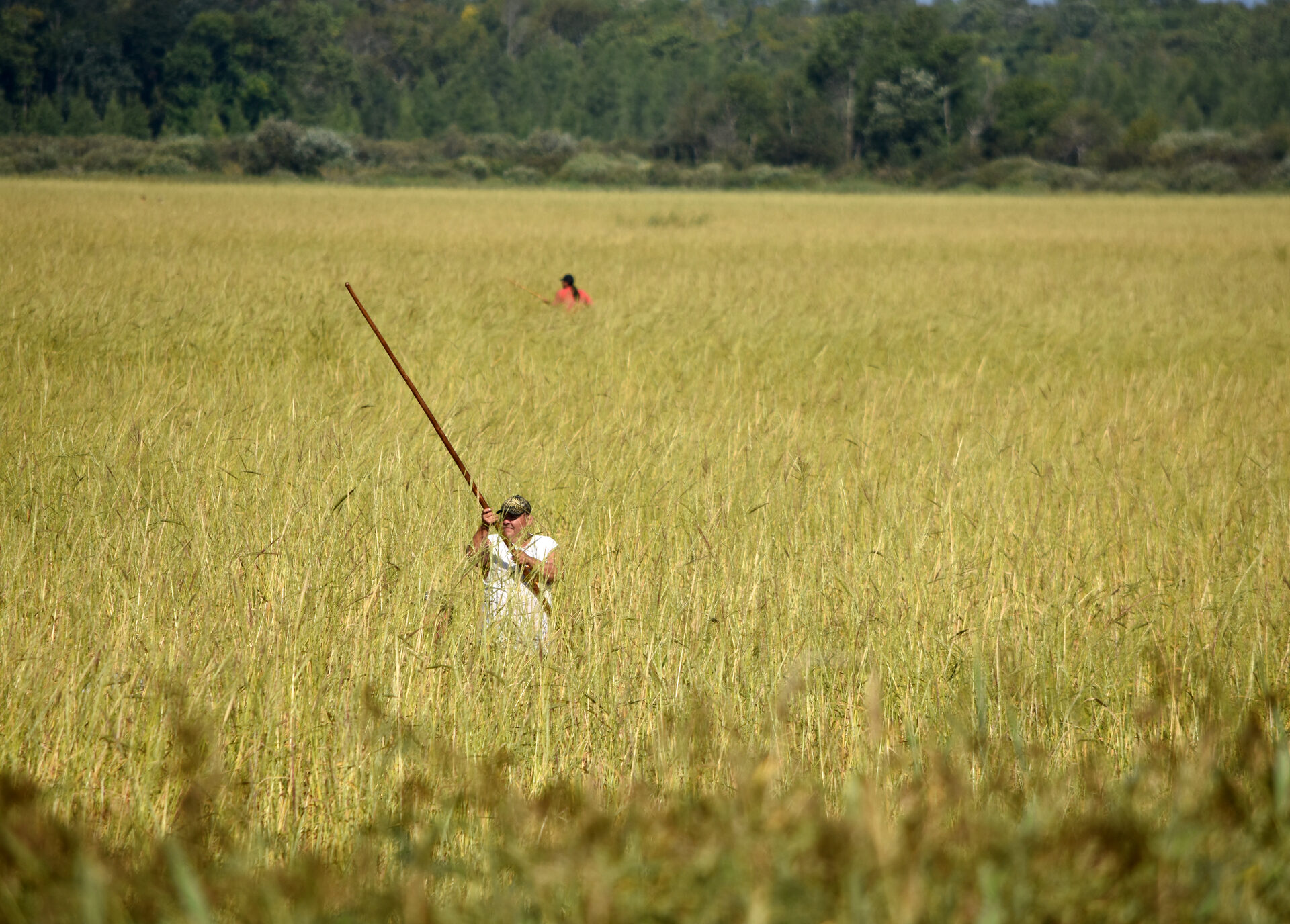
Header image: Leech Lake Band of Ojibwe members harvesting manoomin on Mud Lake, Minnesota, 2015 - George Stringham, U.S. Army Corps of Engineers, Public domain

A documented history
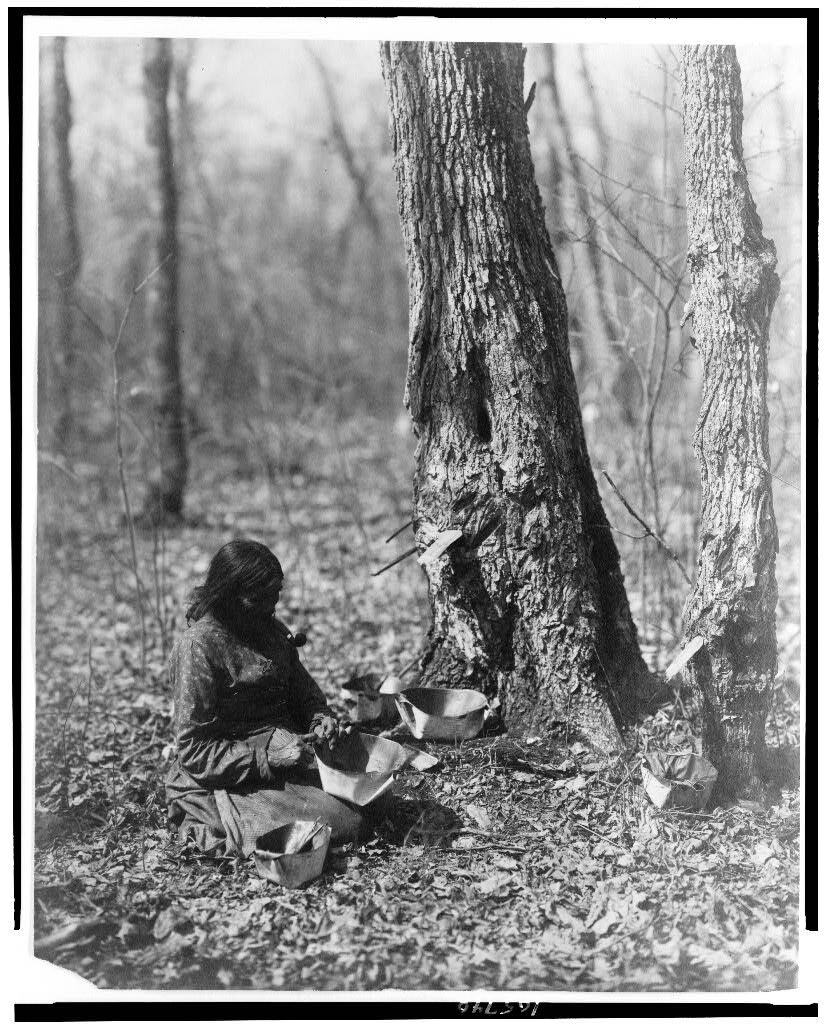
The Anishinaabeg are not one tribe but a council of related peoples: the Ojibwe, the Odawa, and the Potawatomi, bound in the Council of Three Fires. Their own tradition records a centuries-long migration from the Atlantic coast westward, following a prophecy to stop where food grew on the water. That food was manoomin, wild rice, and the stopping place was the Great Lakes. By the time French traders reached the region in the 1600s, Anishinaabe villages ran sophisticated economies of fishing, maple sugaring, gardening, and the rice harvest, governed by clan systems and treaty relationships with neighboring nations.
Between 1807 and 1867 the United States took the vast majority of Anishinaabe land through dozens of treaties, in which the nations reserved hunting, fishing, and rice-gathering rights on the ceded territory - a legal fact that still decides court cases today. Removal followed. In 1838, about 859 Potawatomi were force-marched by militia over 660 miles from Indiana to reservation lands in what is now eastern Kansas; more than 40 people died on the two-month march, most of them children. The route is commemorated as the Potawatomi Trail of Death, declared a Regional Historic Trail in 1994 by Indiana, Illinois, and Kansas.
The assimilation era that followed - land allotment, government and mission boarding schools, punishment for speaking Anishinaabemowin - aimed explicitly at ending these nations as nations. The ceremonial life that survived did so largely underground until the American Indian Religious Freedom Act of 1978. None of this is contested history; it is the documented record, and it is the ground on which everything else on this page stands.
- 1830The US Indian Removal Act authorizes the expulsion of eastern nations; pressure on Potawatomi lands intensifies.
- 1838The Potawatomi Trail of Death: about 859 people force-marched from Indiana to Kansas; more than 40 die, most of them children.
- 1978The American Indian Religious Freedom Act restores the legal right to ceremony after a century of suppression.
- 2018The White Earth Band of Ojibwe adopts a rights-of-manoomin (wild rice) ordinance: the rice has legal standing.
- 2021Manoomin v. Minnesota DNR: wild rice itself sues the state over Line 3 pipeline water permits, in tribal court.


A way of knowing
The clearest contemporary statement of Anishinaabe knowledge comes from Robin Wall Kimmerer, a botanist and enrolled member of the Citizen Potawatomi Nation. In Braiding Sweetgrass she describes the Honorable Harvest: ask permission of the living thing before taking, take only what is needed, never take the first and never the last, use everything taken, give thanks, and give back. Kimmerer presents this not as nostalgia but as a working covenant - an economy in which the currency is reciprocity rather than accumulation.
Anishinaabe ethics are carried in the Seven Grandfather Teachings: wisdom, love, respect, bravery, honesty, humility, and truth. The teachings are public and widely taught - they are displayed, for instance, by the Legislative Assembly of Ontario - and each one names a relationship to maintain rather than a rule to enforce.
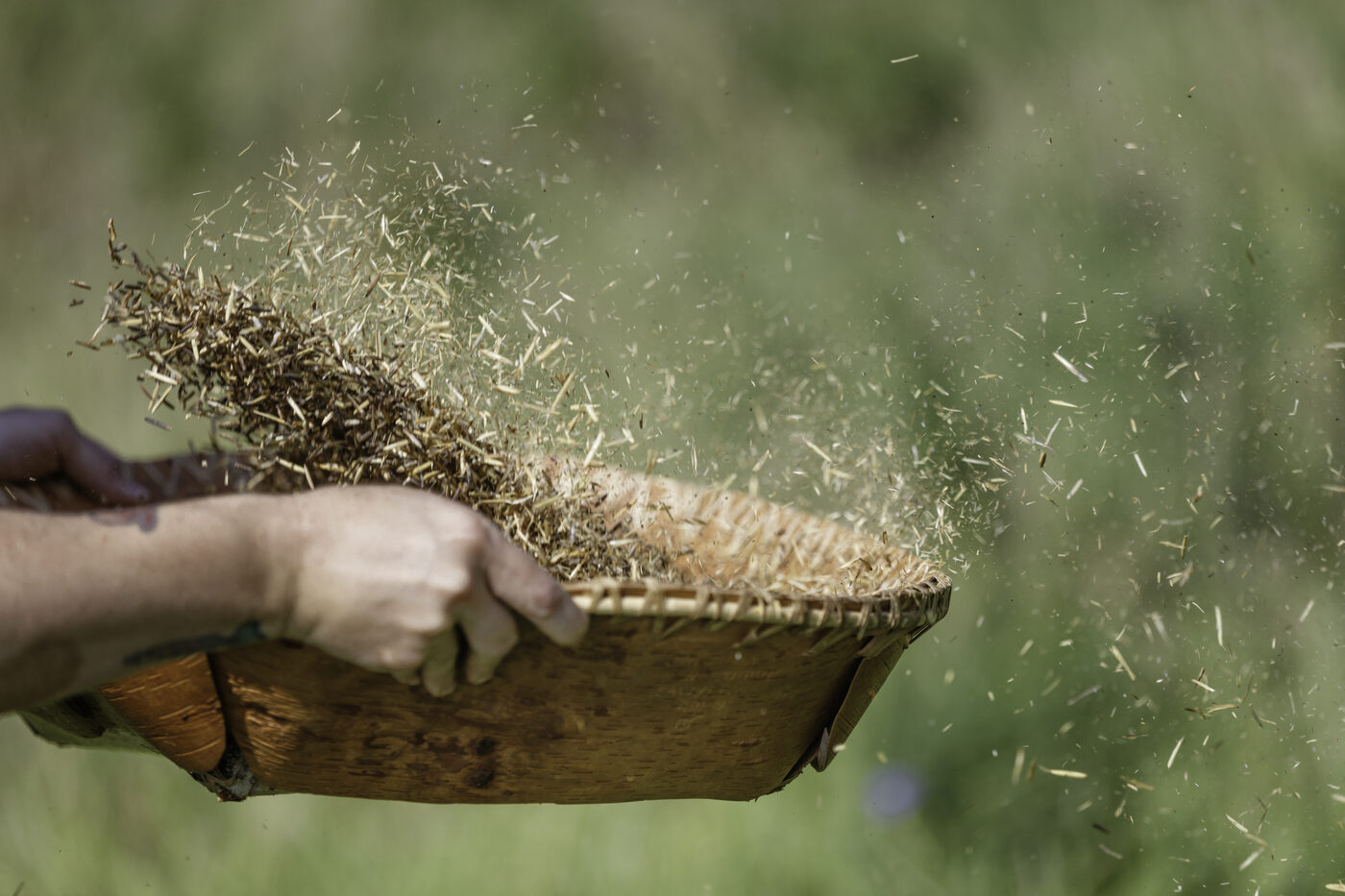
Manoomin shows what this philosophy looks like as agriculture. Wild rice is not planted but tended: water levels are protected, beds are harvested from canoes with knocking sticks that leave most of the grain to reseed and feed the waterfowl, and the rice itself is spoken of as a relative and a gift, not a crop. In Anishinaabe law, as this page's final section shows, manoomin has now been granted rights of its own.
“All flourishing is mutual.”
Robin Wall Kimmerer (Citizen Potawatomi), The Serviceberry: An Economy of Abundance, Emergence Magazine (2022), source
A living nation
The Anishinaabe nations today govern reservations and reserves across the Great Lakes on both sides of the border. Anishinaabemowin, once punished in boarding schools, is taught in immersion schools; the rice harvest, never abandoned, is defended as a legal right. This is not a culture being reconstructed from documents. It is a culture that kept its records in practice.
In 2018 the White Earth Band of Ojibwe adopted a law recognizing the rights of manoomin - the right of wild rice to exist, flourish, and evolve. In 2021 that law was tested in Manoomin v. Minnesota Department of Natural Resources, in which wild rice itself, represented by the band and the 1855 Treaty Authority, sued the state in tribal court over water permits granted for the Line 3 oil pipeline. Reuters described it as a novel rights-of-nature case: a plant as plaintiff.
The Line 3 resistance, led substantially by Anishinaabe women including Winona LaDuke and the organization Honor the Earth, joined that legal argument to a much older one: that the treaty-reserved right to harvest rice means nothing if the water the rice lives in can be destroyed. The pipeline was completed; the legal and political fight it triggered continues, and the rights-of-nature doctrine it advanced is now cited far beyond the Great Lakes.

Reading
Braiding Sweetgrass
The Honorable Harvest, the grammar of animacy, and a working synthesis of botany and Anishinaabe teaching by an enrolled Citizen Potawatomi scientist.
The Serviceberry
Kimmerer's short, direct case for the gift economy - abundance through circulation, not growth. The clearest bridge between Anishinaabe economics and the modern degrowth debate.
The Mishomis Book: The Voice of the Ojibway
An Ojibwe grandmother-grandfather (mishomis) telling of the migration, the prophecies, and the teachings, written for Anishinaabe children and adopted far beyond.
An Indigenous Peoples' History of the United States
The documented frame - treaties, removal, resistance - within which this page's history section sits.
Sources
- Citizen Potawatomi Nation Cultural Heritage Center - Trail of Death
- Potawatomi Trail of Death - historical overview
- Indiana Historical Society - Potawatomi Indian Trail Resolution, 1994 (PDF)
- Illinois House Resolution 170 - Potawatomi Trail of Death
- National Museum of the American Indian - Removal reflections
- Legislative Assembly of Ontario - The Seven Grandfathers
- Robin Wall Kimmerer - biography (author's site)
- 1855 Treaty Authority - rights of manoomin resolution (2018, PDF)
- Reuters - Manoomin v. Minnesota DNR (2021)