RootedWisdom
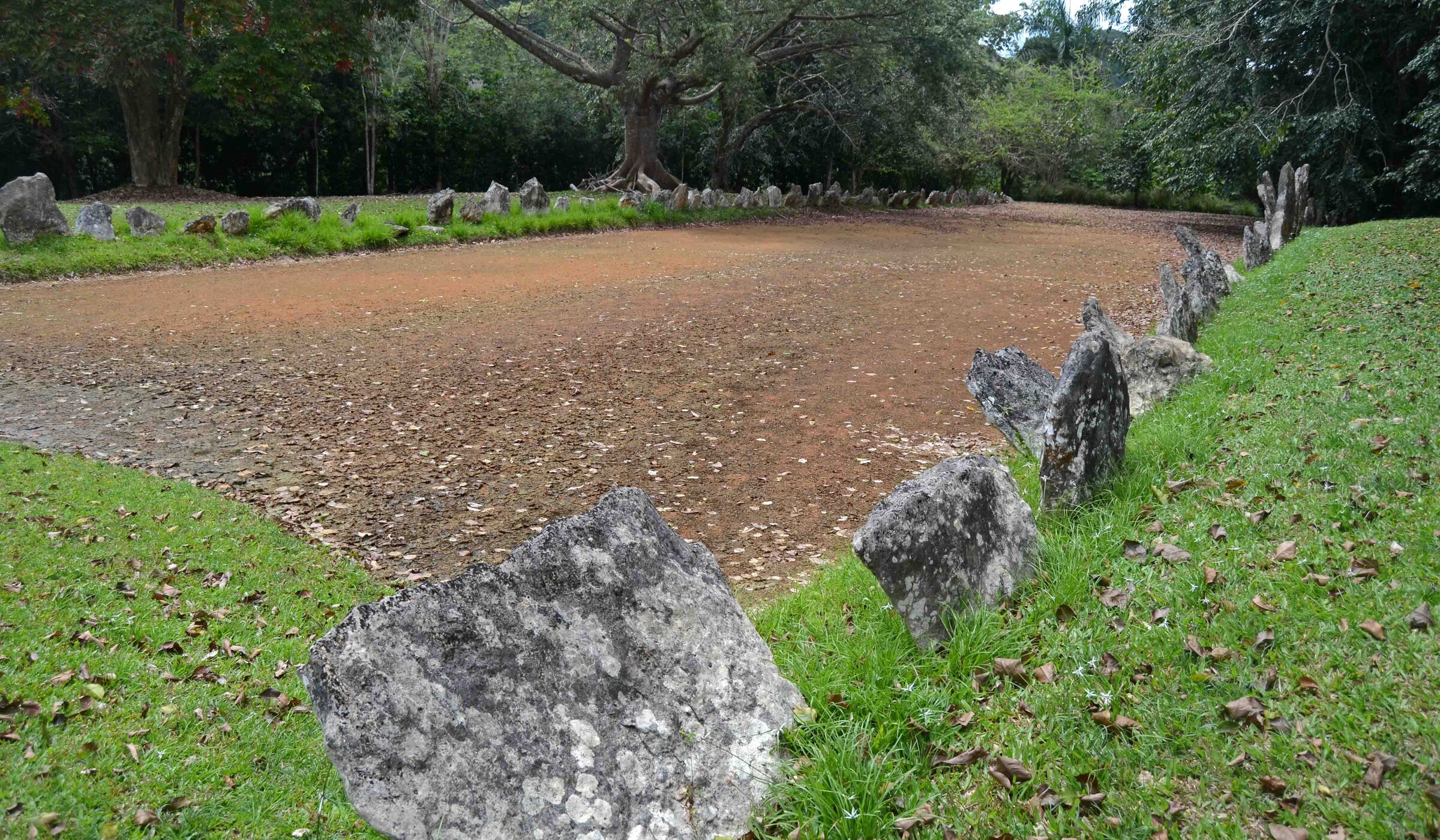
Stone-lined Taíno ball courts at the Caguana Indigenous Ceremonial Center, ringed by forested hills in Utuado, Puerto Rico

Atlas / Caribbean, Greater Antilles and Bahamas

The Taíno of the Greater Antilles

Self-designationTheir island names: Borikén (Puerto Rico), Quisqueya or Ayiti (Hispaniola), Xamayca (Jamaica); 'Taíno' - from their word for 'good' or 'noble' - is the name scholarship later gave them
HomelandThe Greater Antilles and the Lucayan Bahamas: Borikén, Ayiti/Quisqueya, Cuba, Xamayca - a sea-country of ceremonial plazas, cassava mounds and canoe roads
LanguageClassic Taíno, an Arawakan language - the first American language Europeans heard; its words still sail in English: hammock, canoe, hurricane, maize, tobacco, savanna

Header image: The batey courts of Caguana in Utuado - ceremonial plazas where Taíno districts gathered and played - Geoff Gallice via Wikimedia Commons, CC BY 2.0

A documented history

Arawakan-speaking farmers and seafarers carried the culture the Spanish would call Taíno - from their own word for 'good' or 'noble' - from the Orinoco basin up the island chain, reaching the Bahamas by about the eighth century. They built towns of thousands around ceremonial plazas, played the rubber-ball game batey in walled courts like those at Caguana, and carved zemís, figures that held the presence of ancestors and spirits. In October 1492 they were the first people in the Americas to meet Columbus, and the first to be fed into his economy: within two decades, gold-dust quotas, encomienda labor (the Spanish system that granted colonists the forced labor of a district's people), famine and smallpox had collapsed the population of the largest islands.

  1. c. 500 BCArawakan-speaking potters and farmers move up the Antilles from the Orinoco region; their descendants become the peoples later called Taíno.
  2. 1492Columbus makes landfall on Guanahani in the Bahamas; the Taíno are the first Americans he meets - and the first he enslaves.
  3. 1511Agüeybaná II's men drown Diego Salcedo to test Spanish claims of immortality; Borikén rises in revolt.
  4. 1512Hatuey, who fled Hispaniola to warn Cuba, is burned at the stake; las Casas makes his death the emblem of the destruction of the Indies.
  5. 1836Naturalist Constantine Rafinesque coins 'Taíno' as a scholarly name for the islands' first peoples, from their word for 'good' or 'noble'.
  6. 1998Descendant communities found the United Confederation of Taíno People, carrying Caribbean Indigenous testimony to the United Nations.
  7. 2018A genome from a Lucayan woman, a thousand years old: her closest known relatives are today's Arawakan speakers of northern South America, and present-day Puerto Ricans are genetically closer to her than any other population in the study

Resistance never stopped. In 1511 the cacique - the chief - Agüeybaná II of Borikén had his men drown the Spaniard Diego Salcedo to test the strangers' claim to immortality, then rose in revolt. The chief Hatuey, who had fled Hispaniola to warn Cuba, was burned at the stake in 1512 after refusing baptism - Bartolomé de las Casas made his death the emblem of the destruction of the Indies. By the 1540s the official counts of 'Indios' in Hispaniola had fallen to a few hundred, and extinction entered the textbooks. But people folded into rural life - the jíbaro highlands - Puerto Rico's rural mountain country -, the campos of Cuba and the Dominican Republic - carrying Taíno words, foods, farming methods and descent. In 2018 the first ancient Caribbean genome, from a Lucayan woman buried on Eleuthera about a thousand years ago, proved the continuity: her closest known relatives are today's Arawakan speakers of northern South America, and present-day Puerto Ricans are genetically closer to her than any other population in the study.

A way of knowing

The conuco - a mound garden of cassava, sweet potato, maize, beans, squash, peppers, peanuts and tobacco - turned thin tropical soils into permanent fields. Cassava bread, baked from grated and detoxified bitter yuca, kept for months and fed whole fleets. Taíno fishers worked nets, weirs and suckerfish lines, and navigators read stars, currents and the flight of birds between islands; they knew the storm season so well that Juracán, their name for its force, became the word 'hurricane' in every European language.

Taíno specialists worked a ritual economy of relation with zemís: cohoba ceremonies with visionary snuff opened dialogue with ancestors, duho seats carried the caciques, and cotton, shell, guanín gold-copper alloy and fine ceramics moved in exchange networks from island to island and on to the mainland. The ballgame batey was sport, ritual and diplomacy at once - among the first team ballgames Europeans ever witnessed, played with a rubber ball they had never seen bounce.

The conuco

The conuco is a mound garden of cassava, maize, beans and squash - farming thin tropical soils with the forest's logic.

Rooted WisdomAgroecology - the science of farming with ecosystems - studies the Taíno conuco, a family field of many crops planted together, as a living system: a standing answer to fragile tropical soils, hurricanes and hungry fleets.

Zemís

Zemís are spirit presences held in carved stone, wood and cotton - the sacred kept as part of household life.

Rooted WisdomTaíno zemís - objects holding spirit in daily life, from carved figures to sacred stones - resist the modern split between useful things and meaningful ones.

“There is a narrative that Taíno people were wiped out. So we have to make statements at the international level, to say 'wait a minute, we are here.'”

R. Múkaro Agüeibaná Borrero (Taíno), President of the United Confederation of Taíno People, UN Permanent Forum on Indigenous Issues (2022), source

The present tense

What this knowledge says to the present

Old knowledge, working now - the teaching or practice, the gap it answers, the evidence or record.

Each connection is labeled by what the evidence establishes: Practiced before the field named it
AgriculturePracticed before the field named it

Mounds that outlast the plantation

The practice

Conuco mounds concentrate topsoil and control drainage: intercropped cassava, maize, beans and squash in raised beds survive both downpour and drought, and the cassava base keeps producing when hurricanes flatten everything above it.

The gap it answers

Caribbean agriculture swings between plantation monoculture and storm loss. The conuco is the region's documented answer to both - built for the hurricane belt, not despite it.

The evidence

The conuco - intercropped mounds of cassava, maize, beans and squash - is studied by agroecology as a living system, not a fossil: the conuco legacy is a standing answer to thin tropical soils, hurricanes and hungry fleets, practiced centuries before the discipline named it. Cassava itself, detoxified by Taíno processing, now feeds hundreds of millions on three continents.

Source: Theoretical Clues for Agroecological Transitions: The Conuco Legacy (2021)

A living nation

Descendant identity is organized and growing. The United Confederation of Taíno People, founded in 1998, represents communities from Borikén, Kiskeia, Bimini and the diaspora at the UN Permanent Forum on Indigenous Issues - pressing on hurricane recovery, toxic military waste on Vieques and Culebra, and luxury development on sacred sites like Caguana. In 2022 its representatives announced the first Classic Taíno Dictionary and Grammar Guide: a language written off for four centuries, taught again.

Science has joined the testimony. Ancient DNA from the Bahamas shows the Taíno descend from Arawakan-speaking migrants out of the Amazon and Orinoco basins, and that their ancestry lives on in Caribbean people today - most demonstrably in Puerto Rico. 'There is a narrative that Taíno people were wiped out,' says UCTP president R. Múkaro Agüeibaná Borrero. The genome record, the census of self-identified descendants, and the language revival all answer otherwise.

Reading

The Tainos: Rise and Decline of the People Who Greeted Columbus

Irving Rouse · Yale University Press · 1992

The foundational archaeology, island by island, from first settlement to demographic collapse - the baseline every later study argues with.

Taíno: Pre-Columbian Art and Culture from the Caribbean

Fatima Bercht, Estrellita Brodsky, John Alan Farmer and Dicey Taylor (eds.) · El Museo del Barrio / Monacelli Press · 1997

The landmark exhibition catalog: zemís, duhos, ceramics and the meanings Taíno artists built into them.

Sources