RootedWisdom
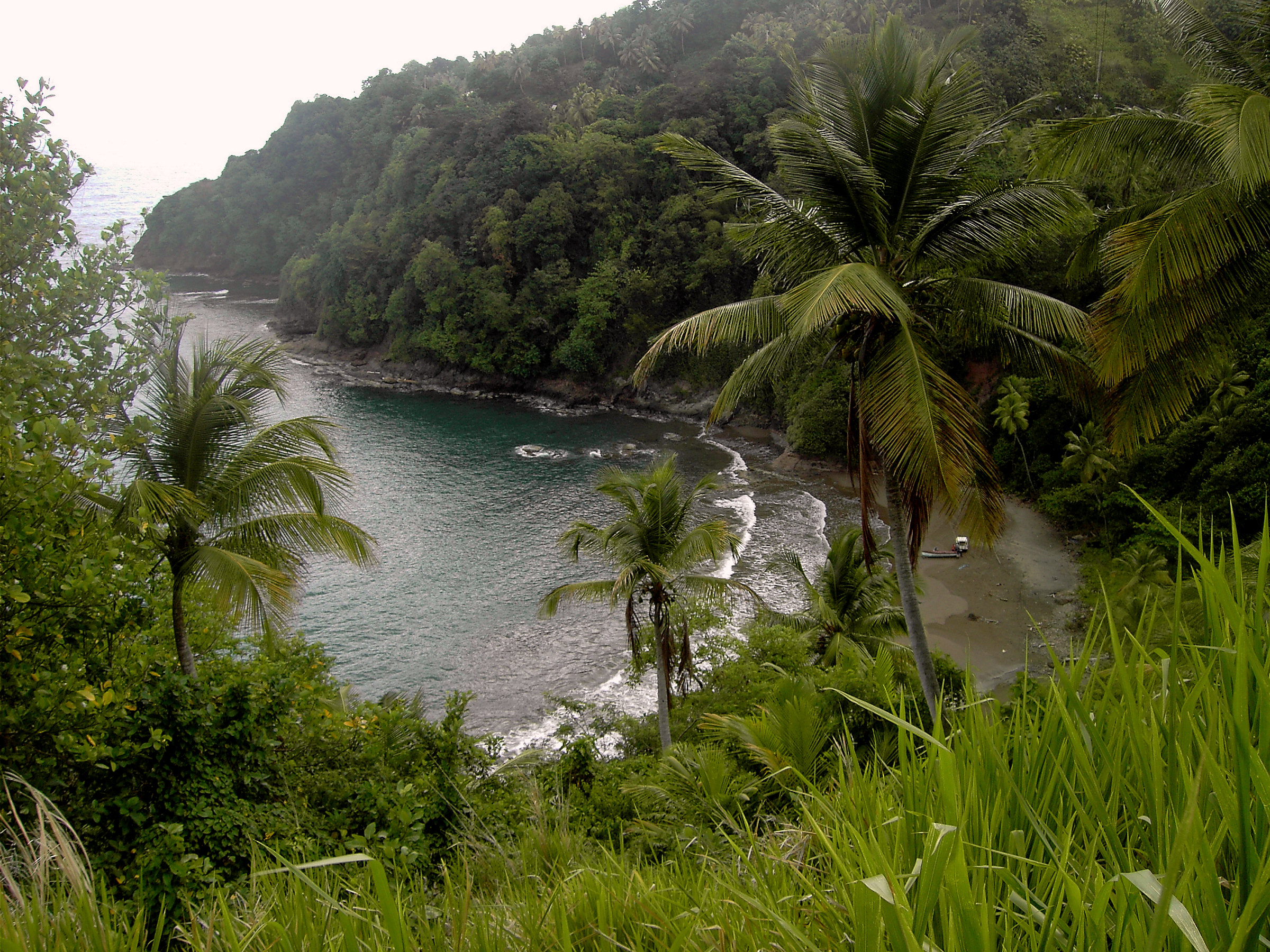
The Kalinago Territory from the sea: forested headlands above dark volcanic coastline on Dominica's northeast shore

Atlas / Caribbean, Dominica

The Kalinago of Waitukubuli (Dominica)

Self-designationKalinago (plural), Karifuna (singular); called 'Carib' in colonial records until Dominica made Kalinago official in 2015
HomelandThe Kalinago Territory: 3,700 acres on the rugged northeast coast of Dominica - Waitukubuli, 'tall is her body'
LanguageHistorically Kalinago (Island Carib), an Arawakan language despite the Carib-sounding name; today mostly English and Dominican Kweyol, the island's French-based creole

Header image: The Kalinago Territory on Dominica's northeast coast - land the community holds collectively - Hans Hillewaert via Wikimedia Commons, CC BY-SA 3.0

A documented history

When Columbus recorded the word 'Caniba' in 1492, he was relaying what the Kalinago's Taino rivals said about their enemies. The Spanish sorted the Caribbean's peoples into 'Arawak' for those they judged friendly and 'Carib' for those who resisted - and karibna, the Island Carib word for 'person', became the root of the English word 'cannibal'. Historian Hilary Beckles has argued the cannibal stories functioned as an ideological campaign to justify genocidal military expeditions; no skeletal evidence supports them. The Caribbean Sea itself is named for the Kalinago.

  1. 1492Columbus records 'Caniba' from Taino accounts of their rivals; karibna, 'person', mutates into 'cannibal'.
  2. 1660Treaty of Saint Charles: England and France recognize Dominica and Saint Vincent as Kalinago; Britain soon ignores it.
  3. 1797The Garifuna of Saint Vincent - Kalinago kin of mixed ancestry - are deported to Roatan; the 1812 eruption of La Soufriere nearly finishes those who stayed.
  4. 1903Britain sets aside 3,700 acres on Dominica's northeast coast: the future Kalinago Territory.
  5. 1997A traditional dugout canoe sails from Dominica to the Orinoco delta, renewing ties with mainland Kalina relatives.
  6. 2015Dominica officially replaces 'Carib' with 'Kalinago'.
  7. 2023Sylvanie Burton is inaugurated as President of Dominica - the first Kalinago, and first woman, to hold the office.

The Kalinago were never conquered in the Lesser Antilles. Through the seventeenth century they played England, France and the Netherlands against each other and held a boundary Europeans called the 'poison arrow curtain'. The 1660 Treaty of Saint Charles recognized Dominica and Saint Vincent as theirs; the British ignored it and annexed both by 1763. On Saint Vincent, the Garifuna - kin of mixed Kalinago and African ancestry - were deported to Roatan in 1797. On Grenada, Chief Kairouane and his men jumped from Leapers' Hill rather than be enslaved. In 1903 the British set aside 3,700 acres on Dominica's northeast coast: today's Kalinago Territory.

A way of knowing

The dugout canoe is the Kalinago master technology: carved from single trunks of gommier, Spanish cedar or the great ceiba - a tree also held to house spirits - with hulls worked differently for river, coast or open sea. In 1997 the Kalinago artist Jacob Frederick and boat-builder Aragorn Dick-Read launched a traditional canoe from Dominica to the Orinoco delta, retracing the sea roads to mainland Kalina relatives; the BBC filmed the voyage as The Quest of the Carib Canoe.

Cassava, dasheen, breadfruit and fish anchor Kalinago cooking: the one-pot of root vegetables and fresh fish simmered in coconut cream and colored with roucou. Bush medicine works alongside clinics - coconut and bay-leaf oils for sprains, herbal teas for common ailments. Basketry, calabash carving and canoe building are practiced, taught and sold at Kalinago Barana Aute, the cultural village opened in the Territory in 2006.

The ceiba

The ceiba is the great tree held to house spirits - the forest as inhabited, never empty.

Rooted WisdomA forest kept as home is protected differently from a forest kept as timber stock: the Kalinago hold their Territory collectively, under their own chief and council, and its woods still give canoe trees, food and medicine.

The dugout canoe

The dugout canoe is a single trunk of wood worked differently for river, coast or open sea - technology fitted to water, not imposed on it.

Rooted WisdomThe Kalinago canoe-building tradition reads water first: one craft, hulls worked differently for river, coast and open sea - the knowledge that carried a dugout from Dominica to the Orinoco delta in 1997.

“I bring you greetings in my native Kalinago language, the language of the first people of the Caribbean whom I am proud to call my ancestors.”

Sylvanie Burton (Kalinago), President of Dominica, UN General Assembly (2025), source

The present tense

What this knowledge says to the present

Old knowledge, working now - the teaching or practice, the gap it answers, the evidence or record.

Each connection is labeled by what the evidence establishes: Written into law or practice
Climate adaptationWritten into law or practice

A national resilience plan rooted in Kalinago practice

The practice

Storm survival is a technical repertoire: crops that bend instead of break, food preserved without refrigeration, buildings designed to be rebuilt in days. Dominica's post-Maria bid to become the world's first climate-resilient nation draws partly on Kalinago building, planting and storing knowledge.

The gap it answers

Hurricane Maria cost Dominica roughly 226% of GDP in one night. For small island states, a single storm can erase the entire economy twice over - recovery plans that ignore local storm knowledge rebuild the same fragility.

The record

Dominica's bid to become the world's first climate-resilient nation runs partly on Kalinago knowledge - building, planting and storm reading folded into national policy after Hurricane Maria.

226% of 2016 GDPdamages and losses from Hurricane Maria - World Bank post-disaster assessment, 2017
2018CREAD - the Climate Resilience Execution Agency - established by law

Sources: Climate Resilience Act 2018, Government of Dominica; UNDP - Strengthening Community Resilience within Kalinago Territory; World Bank/GFDRR Post-Disaster Needs Assessment, 2017 - the 226% of GDP figure

A living nation

Around 3,000 Kalinago live in the Territory, electing their own chief and council under the Carib Reserve Act of 1978 - collectively held Indigenous land without equivalent in the archipelago. Anette Sanford became the first woman elected Kalinago chief in 2019; Lorenzo Sanford, elected in 2024, is the youngest ever. And in 2023 Sylvanie Burton, born in the Territory, was inaugurated as President of Dominica - the first Kalinago, and the first woman, to hold the office.

Hurricane Maria tore through the Territory in 2017, and rebuilding has fused with Dominica's bid to become the world's first climate-resilient nation - a plan in which Kalinago knowledge of the land counts as infrastructure, not folklore. Language teaching, the Barana Aute cultural village and a young generation of artists and activists have reframed the Territory's question: not whether Kalinago culture survives, but how loudly.

Reading

The Dominica Story: A History of the Island

Lennox Honychurch · Macmillan Caribbean · 1995

The standard history by Dominica's own historian, with full chapters on Kalinago archaeology, resistance and the Territory.

Wild Majesty: Encounters with Caribs from Columbus to the Present Day

Peter Hulme and Neil L. Whitehead (eds.) · Clarendon Press · 1992

The essential anthology: the European documents on the Kalinago, annotated so the manufacture of the 'cannibal' myth becomes visible.

Sources