Atlas / Amazon, Brazil/Venezuela
The Yanomamiof the Amazon
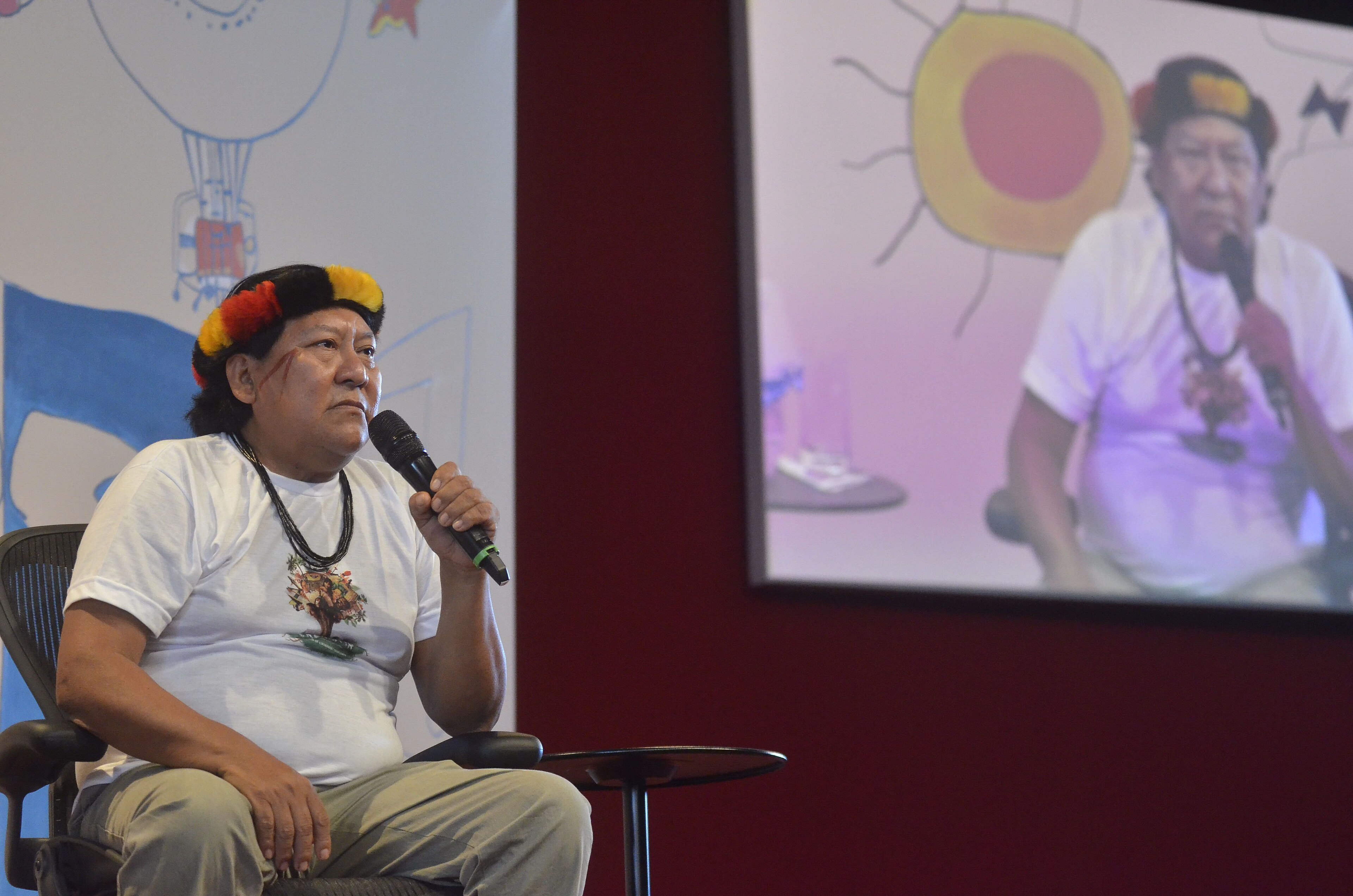
Header image: Davi Kopenawa, Yanomami shaman and spokesperson - Fernando Frazão/Agência Brasil, CC BY 3.0 BR

A documented history
The Yanomami lived in sustained isolation from non-Indigenous society until remarkably recently: full contact came only in the 1950s, when roads, missions and miners reached the forest. Epidemics followed the contact routes and killed about one in three Yanomami. Among the dead was the mother of Davi Kopenawa, then a child, who would become the forest's most widely heard spokesperson.
From the 1970s the territory was invaded repeatedly by gold miners, who brought malaria, mercury and violence. The pattern never fully stopped: in January 2023 the Brazilian government declared a public health emergency in Yanomami territory after illegal mining drove a crisis of child malnutrition and disease, and began expelling thousands of miners by force.
- 1950sSustained contact with non-Indigenous society begins; epidemics on the contact routes kill about one in three Yanomami, including Davi Kopenawa's mother.
- 2013The Falling Sky appears in English: Kopenawa's dictated testimony, worked into text with anthropologist Bruce Albert, translated by Nicholas Elliott and Alison Dundy.
- Jan 2023Brazil declares a public health emergency in Yanomami territory after illegal gold mining drives malnutrition and disease; expulsion of miners follows.

A way of knowing
Yanomami cosmology holds that the sky is fragile. The xapiri, spirit allies of the shamans, hold it up; when shamans die and their knowledge is not passed on, the sky weakens. 'The falling sky' is therefore not a metaphor for climate anxiety but the name of a specific, reasoned warning: destroy the forest and the people who keep it, and everything ends. Kopenawa's book carries the title.
Kopenawa's critique of what he calls the merchandise civilization is equally specific. The white world, he argues, is addicted to goods; it calls the forest 'environment' as if the Earth could be split into a leftover part. The Yanomami do not separate nature from people: the forest is inhabited, related, and alive with beings whose fate is tied to ours.
“There is only one sky and we must take care of it, for if it becomes sick, everything will come to an end.”
Davi Kopenawa (Yanomami), The Guardian (2014), source
A living nation
Far from a vanishing people, the Yanomami today run one of the Amazon's most effective defense movements. Kopenawa and the Hutukara Yanomami Association document invasions, testify before courts and governments, and argue the forest's case in the world's own terms - satellite data, public health statistics, law - without surrendering the xapiri's terms.
The 2023 emergency made their warnings impossible to ignore: thousands of Yanomami children malnourished while illegal gold sat in international supply chains. The territory's defense is now a test case for whether Brazil's institutions can protect a people whose knowledge the planet increasingly cites.
Reading
The Falling Sky: Words of a Yanomami Shaman
Dictated testimony, not a book 'about' the Yanomami: a shaman explains the xapiri, the falling sky, and the sickness of merchandise in his own reasoning. Authorship is shared honestly - Kopenawa's words, worked into text with Albert.
Ideas to Postpone the End of the World
A companion voice from another Brazilian nation: short lectures against the growth illusion, arguing that humanity is a river, not a cargo cult. Krenak is Krenak, not Yanomami; the pairing is thematic, not ethnic.
Sources
- The Guardian: Davi Kopenawa on western living, the environment and politics (2014)
- Reuters: Brazil declares emergency over deaths of Yanomami children from malnutrition (Jan 2023)
- Yale Environment 360: Brazil's Yanomami mining, malaria and malnutrition crisis
- Harvard University Press: The Falling Sky