Atlas / Southern Africa
The Ovaherero and Nama of Namibia
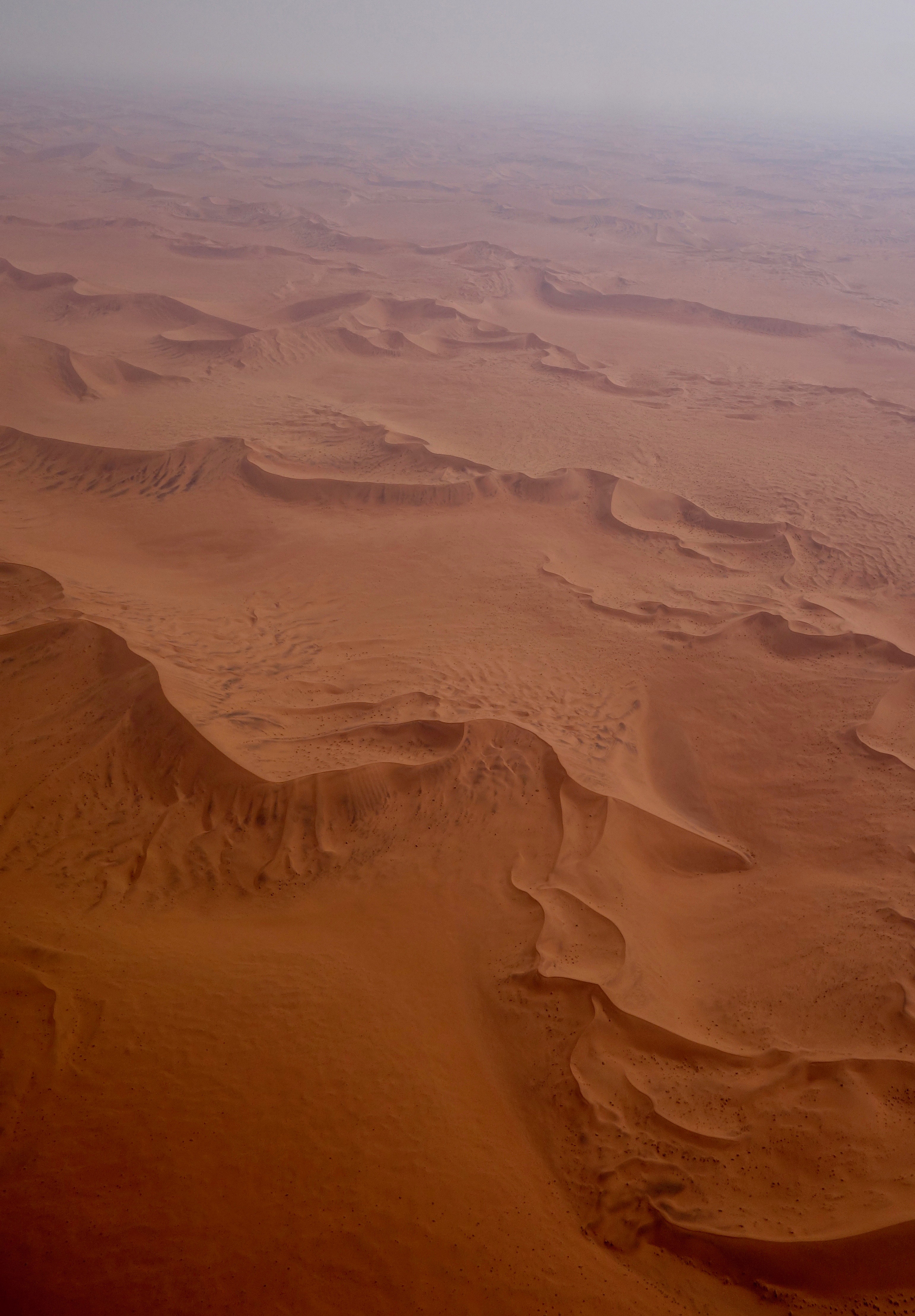
Header image: Aerial view over the Namib Desert, Namibia, 2017 - Sonse via Wikimedia Commons, CC BY 2.0

A documented history
Germany proclaimed the colony of South West Africa in 1884 and took the land and cattle on which Ovaherero and Nama life depended. In January 1904 the Herero rose; in October, General Lothar von Trotha issued an extermination order - the Vernichtungsbefehl - and his troops drove the Herero into the Omaheke desert and sealed the water holes. The Nama under Hendrik Witbooi fought on until 1907. Tens of thousands were killed; thousands more died in concentration camps, including the camp on Shark Island off Lüderitz.
The killings were industrial in their record-keeping: prisoners' remains were shipped to Germany for racial 'research.' It was, in the words of the German government itself a century later, a genocide - the first of the twentieth century, carried out by the state that would later carry out the Holocaust, and then largely struck from German memory.
- 1884Germany proclaims the colony of South West Africa.
- Jan 1904The Herero rise against land and cattle dispossession.
- Oct 1904Von Trotha's extermination order; Herero driven into the Omaheke, water holes sealed. Nama war follows to 1907.
- 1904-1908Genocide of the Ovaherero and Nama: tens of thousands killed, thousands more dead in camps including Shark Island.
- 2018Germany returns human remains taken for racial research, at a ceremony in Berlin.
- 28 May 2021Germany officially recognizes the genocide and pledges 1.1 billion euros; descendant organizations reject the intergovernmental form of the deal.
A way of knowing
What survived the camps was memory kept as discipline. Descendant communities preserved the names of the dead, the sites of the wells and camps, and the text of von Trotha's order through oral tradition and church records, until German archives caught up with what Ovaherero and Nama families had always said. The commemoration rides and reburial ceremonies of the Ovaherero, and the Nama traditional councils, are archives in motion.
The legal knowledge ran the other way: descendant organizations - the Ovaherero Paramount Chiefs and Nama traditional leaders - spent decades forcing the word 'genocide' into official German speech, and then scrutinized what the admission meant. When Germany and Namibia negotiated the 2021 declaration between governments, many Ovaherero and Nama organizations rejected it: negotiated over their heads, they said, and structured as development aid rather than reparations owed.
A living nation
On 28 May 2021, Germany officially recognized the killings as genocide 'from today's perspective' and pledged 1.1 billion euros in development support over 30 years. The recognition mattered; its form remains contested. Descendant organizations continue to demand direct negotiations and reparations, and the declaration has not settled the question.
Repatriation continues: human remains taken to Germany for racial research have been returned in ceremonies since 2011, including a major return in Berlin in 2018. The Ovaherero and Nama are not a vanished people - they are nations in court, in parliament and in the saddle, pressing a claim a century in the making.
Reading
The Kaiser's Holocaust: Germany's Forgotten Genocide and the Colonial Roots of Nazism
The fullest account for general readers of the 1904-08 genocide and its archival trail. Both authors are non-Indigenous historians (British-Nigerian and Danish); the Ovaherero and Nama voices themselves appear through the documents they preserved.
Herero Heroes: A Socio-Political History of the Herero of Namibia, 1890-1923
The standard scholarly history of how the Herero survived the genocide and rebuilt a nation. Gewald is a Dutch historian; credited as such.
Sources
- BBC: Germany officially recognizes colonial-era Namibia genocide (28 May 2021)
- German Federal Foreign Office: joint declaration with Namibia (2021)
- Faber: The Kaiser's Holocaust