Atlas / Central America
The Maya K'iche' of Guatemala
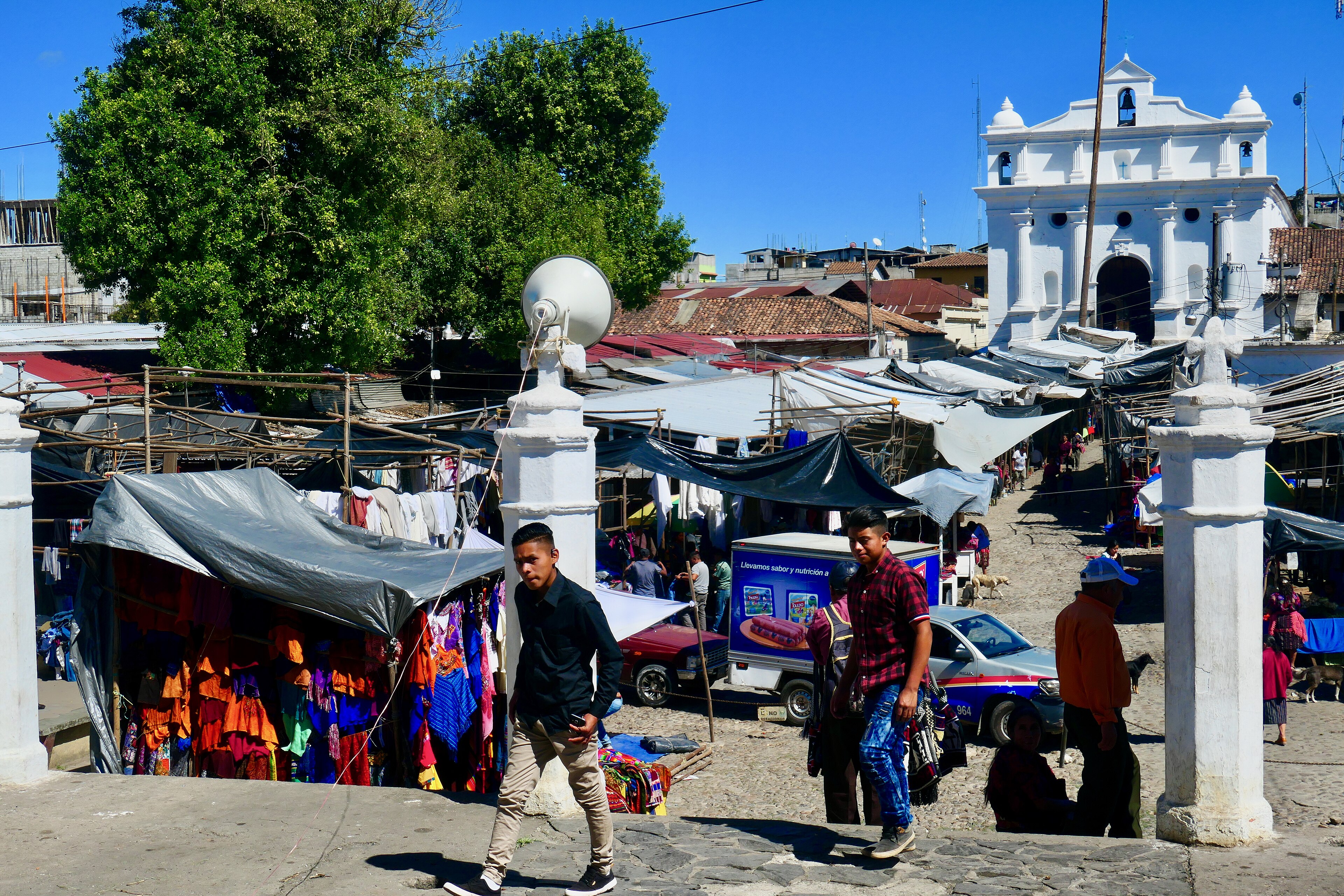
Header image: Market day in Chichicastenango, a K'iche' town in the Guatemalan highlands, February 2020 - Bruno Rijsman via Wikimedia Commons, CC BY-SA 2.0

A documented history
The K'iche' built one of the great highland states of Mesoamerica before the Spanish conquest of 1524, and carried their creation account, the Popol Vuh, into a sixteenth-century manuscript that survived. Colonization, and then the coffee economy, turned Maya land and labor into someone else's wealth.
In 1954 a US-backed coup ended Guatemala's democratic decade and opened thirty-six years of civil war. In the early 1980s the army's scorched-earth campaigns fell hardest on the Maya highlands: the UN-sponsored Commission for Historical Clarification later found that acts of genocide had been committed against Maya groups - 83 percent of the war's identified victims were Maya, in a country where Maya are roughly half the population.
- 1524Spanish forces under Alvarado defeat the K'iche' state; colonization of the highlands begins.
- 1954US-backed coup ends Guatemala's democratic decade; civil war follows from 1960.
- 1982-83Scorched-earth campaigns devastate the Maya highlands.
- 1992Rigoberta Menchú Tum, K'iche', receives the Nobel Peace Prize.
- 1996Peace accords end the 36-year civil war.
- 1999CEH report 'Memory of Silence': approx. 200,000 killed or disappeared, 83% of identified victims Maya, acts of genocide by the state.
- 2013Ríos Montt convicted of genocide against the Ixil; the verdict is annulled ten days later.
A way of knowing
In 1983 a young K'iche' woman, Rigoberta Menchú Tum, narrated her life to the anthropologist Elisabeth Burgos-Debray: I, Rigoberta Menchú. The testimonio carried the highlands' reality - the fincas, the army, the resistance, the cost - to the world, and in 1992, the five-hundredth year since 1492, Menchú received the Nobel Peace Prize.
K'iche' knowledge is agricultural and calendrical as much as political: the 260-day chol q'ij calendar still organizes planting, ceremony and obligation, kept by daykeepers in highland towns. The market at Chichicastenango, running for centuries on the church steps, is that living continuity - not folklore staged for visitors.
A living nation
The CEH's 1999 report, Memory of Silence, documented roughly 200,000 killed or disappeared and named state responsibility for acts of genocide. In 2013 a Guatemalan court convicted former dictator Efraín Ríos Montt of genocide against the Ixil Maya - the first such conviction of a former head of state by a domestic court - before the ruling was annulled on procedural grounds ten days later.
K'iche' is today one of the most widely spoken Indigenous languages in the Americas, and highland communities continue to organize - for land, for language, and against megaprojects imposed without consent. The war's wounds and the accounting for them are both still open.
Reading
I, Rigoberta Menchú: An Indian Woman in Guatemala
The testimonio that carried the highlands' reality to the world. Menchú narrated; Burgos-Debray, a Venezuelan-French anthropologist, recorded and edited - both roles credited. Some details of the memoir were later contested by the anthropologist David Stoll; the historical record above rests on the UN-sponsored CEH, not on contested details.
Popol Vuh: The Definitive Edition of the Mayan Book of the Dawn of Life
The K'iche' creation account, surviving in a sixteenth-century manuscript by anonymous K'iche' authors. Tedlock is a non-Indigenous translator working from the K'iche' text; the words remain the ancestors'.
Sources
- Nobel Prize: Rigoberta Menchú Tum, Peace Prize 1992
- CEH, 'Memory of Silence' (1999) - full English report
- Verso Books: I, Rigoberta Menchú