Atlas / Oceania
The Māori of Aotearoa
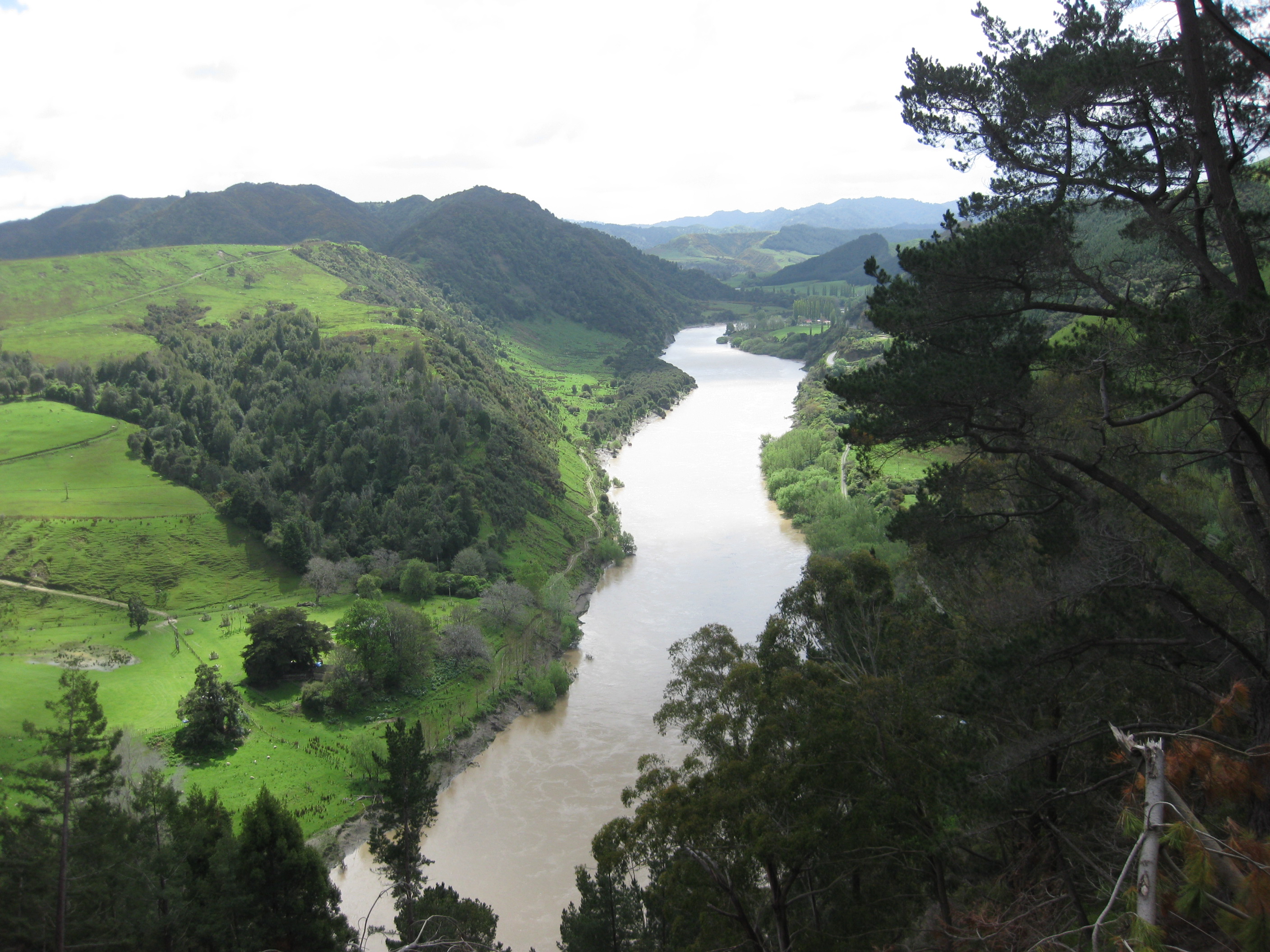
Header image: The Whanganui River - Te Awa Tupua, a legal person since 2017 - North Island, New Zealand, 2008 - Felix Engelhardt via Wikimedia Commons, CC BY 2.0

A documented history
In 1840, Māori rangatira (chiefs) and the British Crown signed the Treaty of Waitangi. Its two texts did not say the same thing: the English text asserted Crown sovereignty, while the Māori text reserved tino rangatiratanga - chiefly authority over lands, villages and treasures. What followed ran on the English version: confiscation, settler courts, and a century and a half of land loss that Māori protested from the start.
The state also legislated against knowledge itself. The Tohunga Suppression Act 1907 criminalized the practice of tohunga - the experts who carried healing, genealogy and ceremony. Through the twentieth century, schooling in English and migration to the cities pushed te reo Māori toward collapse; by the 1970s it was no longer being passed to most children.
- 1840Treaty of Waitangi signed between Māori rangatira and the Crown; the English and Māori texts diverge on what was agreed.
- 1907Tohunga Suppression Act criminalizes the practice of tohunga, carriers of healing and knowledge.
- 13 Apr 1982The first kōhanga reo language nest opens - total-immersion preschool in te reo.
- 1987Te reo Māori becomes an official language of New Zealand.
- 2017Te Awa Tupua Act: the Whanganui River becomes a legal person.
- 2022Matariki, the Māori new year, first observed as a national public holiday.
A way of knowing
Kaitiakitanga is usually translated as guardianship, but its root is genealogical: people and land are relatives, so care for a river or a forest is care for kin. The Whanganui iwi saying runs: Ko au te awa, ko te awa ko au - I am the river, and the river is me.
Linda Tuhiwai Smith's Decolonizing Methodologies (1999) gave this relationship a research program: whose questions get asked, whose knowledge counts as evidence, and who benefits. It became one of the most influential works in Indigenous studies worldwide. Rangi Mātāmua (Tūhoe) did the same for the sky: drawing on manuscripts kept in his own family, his Matariki: The Star of the Year records Māori astronomy as living knowledge, and the rising of Matariki - the Pleiades - now marks a national new year.
A living nation
On 13 April 1982, the first kōhanga reo - a 'language nest' preschool run entirely in te reo - opened. The model spread into hundreds of nests and on through schooling; in 1987 te reo Māori became an official language of New Zealand. A language the state had punished out of children is now taught back to them by their grandparents.
In 2017 the Te Awa Tupua Act made the Whanganui River a legal person, with guardians appointed to speak for it - the legal system, for once, agreeing with what the iwi had always said. In 2022 Matariki was first observed as an official public holiday, the first in the country's calendar drawn from Māori knowledge rather than imported dates.
Reading
Decolonizing Methodologies: Research and Indigenous Peoples
The book that turned 'research' itself into a colonial question and set the terms for Indigenous studies worldwide. Presented here as further reading: this page teaches from the documented cases, not from the book's contents.
Matariki: The Star of the Year
Māori astronomy in Māori terms, drawn from manuscripts kept in the author's own family - the scholarship behind the Matariki public holiday.
Sources
- NZ History: the first kōhanga reo opens, 13 April 1982
- Te Awa Tupua (Whanganui River Claims Settlement) Act 2017 - full text
- Tohunga Suppression Act 1907 - official text
- National Library of New Zealand: catalog record, Decolonizing Methodologies
- Huia Publishers: Matariki: The Star of the Year