Atlas / Oceania - Pacific
The Kānaka Maoli of Hawaiʻi
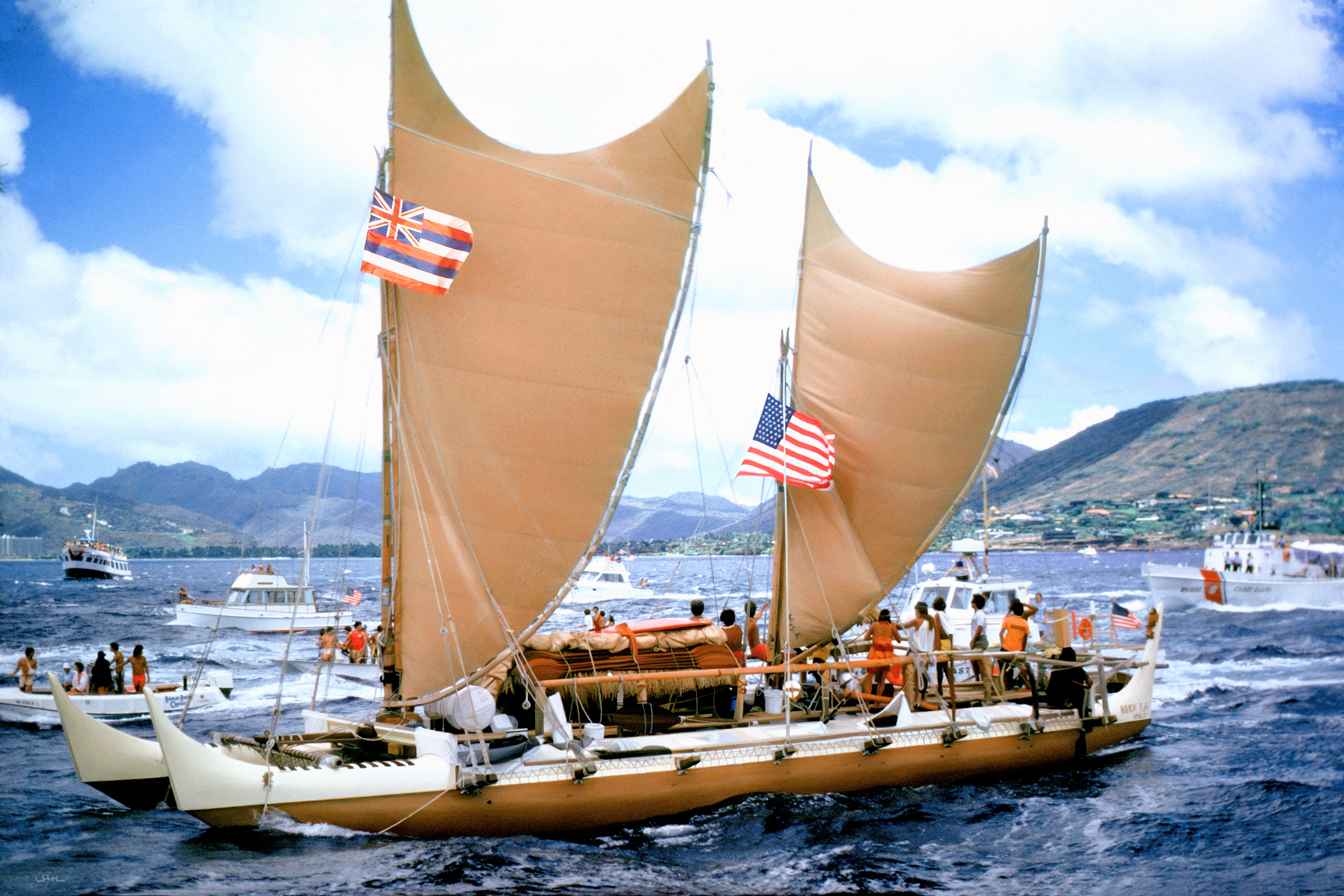
Header image: Hōkūleʻa arrives in Honolulu from Tahiti, 1976 - the first voyaging-canoe crossing by traditional navigation in generations - Phil Uhl via Wikimedia Commons, CC BY-SA 3.0

A documented history
In 1893, American businessmen backed by US Marines overthrew the Hawaiian Kingdom; annexation by the United States followed in 1898. Three years after the overthrow, Act 57 (1896) made English the mandatory medium of instruction in every school in the territory, and Hawaiian-speaking children were punished into silence. Within two generations, ʻōlelo Hawaiʻi had nearly stopped being passed on.
The same era pushed aside the ocean knowledge that had settled the Pacific: navigation by stars, swells, winds and birds, without instruments. By the 1970s no one in Hawaiʻi still practiced it. The tradition survived on Satawal, a small atoll in Micronesia, in the person of master navigator Mau Piailug.
- 1893The Hawaiian Kingdom is overthrown by American businessmen backed by US Marines; US annexation follows in 1898.
- 1896Act 57 makes English the mandatory medium of instruction; ʻōlelo Hawaiʻi is pushed out of the schools.
- 1976Hōkūleʻa sails to Tahiti and back under Mau Piailug's traditional navigation - no instruments.
- 1978ʻŌlelo Hawaiʻi becomes a co-official language of the State of Hawaiʻi.
- 1980sThe first Pūnana Leo immersion preschools open; the state Kaiapuni program follows.
- 2013-2019Mālama Honua: Hōkūleʻa circles the planet with a message of ocean care.

A way of knowing
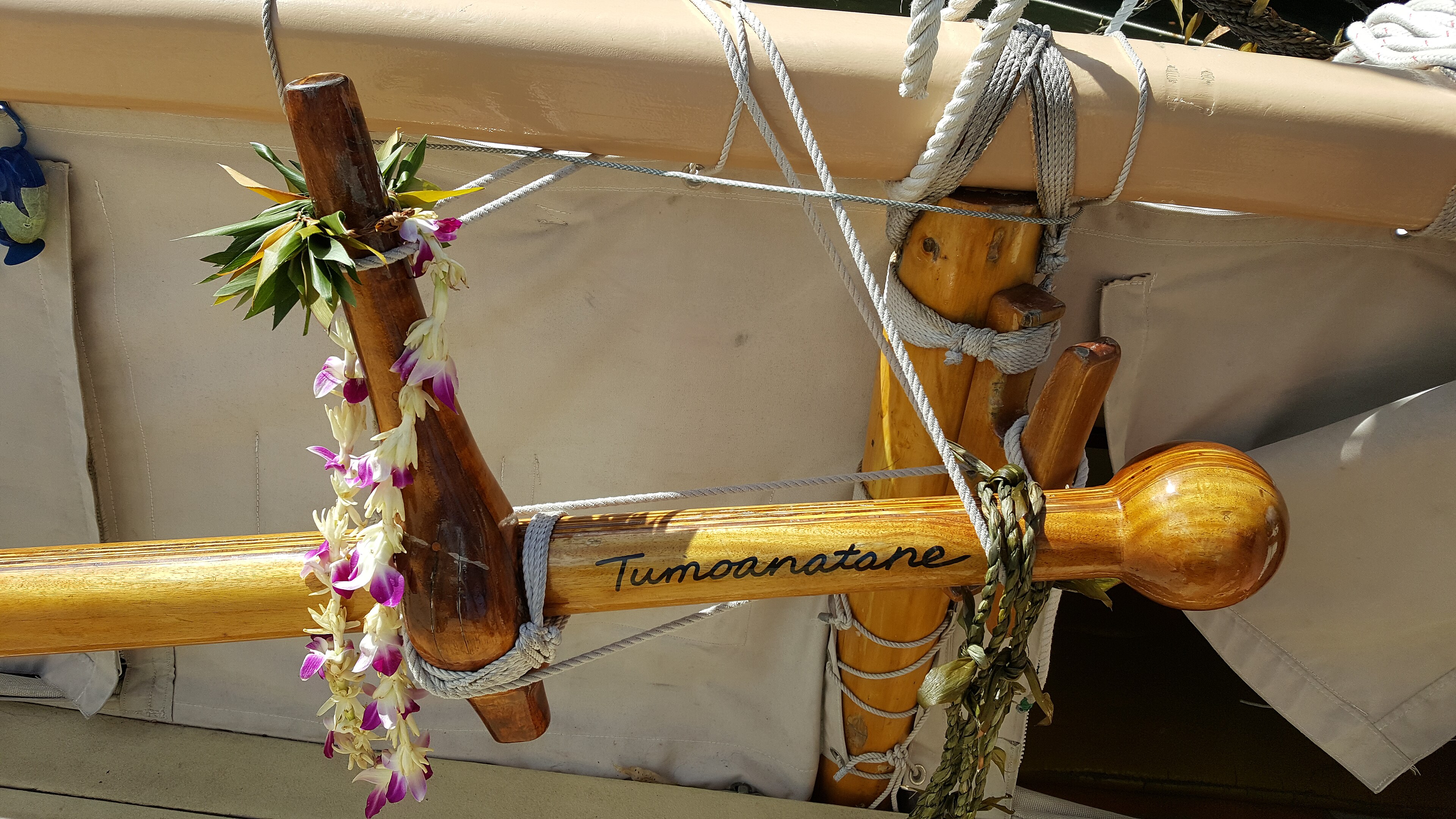
In 1976, the Polynesian Voyaging Society's canoe Hōkūleʻa sailed from Hawaiʻi to Tahiti and back with Piailug navigating by the old methods alone. The voyage showed that the settlement of the Pacific had been deliberate exploration, not drift, and it relit a renaissance: Nainoa Thompson and a new generation trained in the star compass and the discipline of reading an ocean.
The Tongan writer Epeli Hauʻofa gave the renaissance its most quoted reframing: the Pacific is not 'islands in a far sea' - small, isolated, at the edge of the world - but 'a sea of islands', a connected highway its peoples have traveled for millennia. The colonial map shrank the ocean; the voyagers knew better.
A living nation
The Pūnana Leo immersion preschools, begun in the 1980s, raised a new generation of first-language speakers, and the state's Kaiapuni program carries them on through school; ʻōlelo Hawaiʻi is again a co-official language of the state.
From 2013 to 2019, Hōkūleʻa completed the Mālama Honua Worldwide Voyage, circling the planet with the message mālama honua - care for Island Earth. The canoe that proved the ancestors' science now carries their conclusion: the ocean is not a barrier between peoples but the thing they share.
Reading
Hawaiki Rising: Hōkūleʻa, Nainoa Thompson, and the Hawaiian Renaissance
The fullest telling of the canoe and the renaissance. Low is a non-Indigenous anthropologist who sailed with the voyaging community; credited as such, not presented as an Indigenous-authored text.
We Are the Ocean: Selected Works
Includes 'Our Sea of Islands' (1994), the essay that inverted the colonial map of the Pacific. Hauʻofa was Tongan, not Hawaiian; the renaissance he describes belongs to the whole ocean.
Sources
- Polynesian Voyaging Society: the Mālama Honua Worldwide Voyage 2013-2019
- Hawaiʻi State Department of Education: history of the Kaiapuni (Hawaiian immersion) program
- University of Hawaiʻi College of Education: Act 57, Section 30 (1896)
- Epeli Hauʻofa, 'Our Sea of Islands', The Contemporary Pacific (1994), JSTOR
- University of Hawaiʻi Press: Hawaiki Rising