Atlas / Arctic Canada
The Inuit of Nunavik
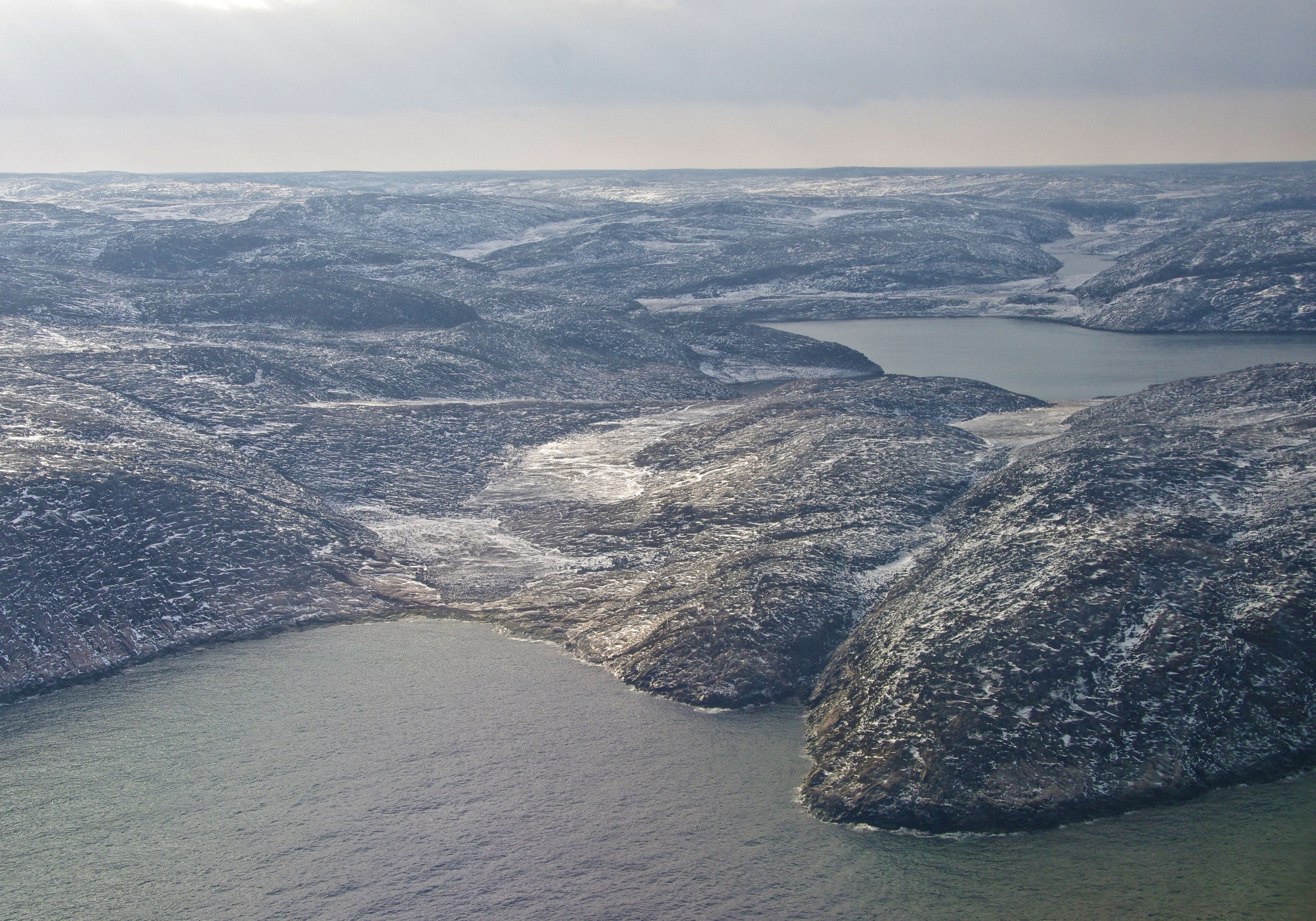
Header image: Aerial view over the Nunavik tundra, northern Quebec, 2014 - Ian Schofield via Wikimedia Commons, CC BY 2.0

A documented history
In the 1950s, Canada moved Inuit families from northern Quebec to the High Arctic - over a thousand kilometers north - as human flagposts in the Cold War contest over Arctic sovereignty. Promised game and the option to return, families found neither: they were left to survive one of the harshest environments on Earth, and the promised way home did not exist. On 18 August 2010, the Government of Canada formally apologized for the High Arctic relocations.
The same decades compressed three lifetimes into one. Sheila Watt-Cloutier, born in Nunavik in 1953, 'grew up the first 10 years of my life only travelling by dogteam... We went from dogteam to miniskirts and rock and roll, like overnight.'
- 1953-55High Arctic relocations: Inuit families moved from northern Quebec to the High Arctic as sovereignty markers.
- 2002Sheila Watt-Cloutier elected Chair of the Inuit Circumpolar Conference in Kuujjuaq, Nunavik.
- 2010Canada formally apologizes for the High Arctic relocations (18 August).
- 2015The Right to Be Cold published - climate change argued as a human-rights issue from an Inuk life.
A way of knowing
Inuit knowledge is read from ice, weather and animal behavior - a literacy the whole planet now needs, because the Arctic warms faster than anywhere else. Watt-Cloutier's phrase 'the right to be cold' reframes climate change as a human-rights question: a people's way of life depends on a frozen world staying frozen.
Leadership, in this tradition, is provision. 'A hunter is a leader,' Watt-Cloutier says - the hunter's discipline, patience and responsibility to feed others are the values to build on, not an eccentric survival skill.
“A hunter is a leader.”
Sheila Watt-Cloutier (Inuk, Nunavik), CBC (2018), source
A living nation
Watt-Cloutier was elected Chair of the Inuit Circumpolar Conference in Kuujjuaq, Nunavik, in 2002, and carried the 'right to be cold' argument to the world's stages, including a Nobel Peace Prize nomination. Her case: 'Climate change is not just environment. Climate change is about housing, it is about food security, it is about education.'
Nunavik's communities today govern through their own institutions, teach in Inuktitut, and negotiate with a Canada that has apologized for the relocations. The early warning continues: what happens to the ice happens first to the people who read it.
Reading
The Right to Be Cold
The Arctic's most cited human-rights argument, from the woman who made it: memoir, ice knowledge and climate diplomacy in one voice.
The Falling Sky: Words of a Yanomami Shaman
The thematic companion from the opposite end of the Earth: another first-person account of a homeland treated as a resource frontier. Different people, different climate, same structure of fight.
Sources
- Inuit Circumpolar Council: 9th General Assembly, Kuujjuaq (2002)
- Government of Canada: apology for the relocation of Inuit families to the High Arctic (2010)
- CBC: Q&A with Sheila Watt-Cloutier (2018)
- University of Minnesota Press: The Right to Be Cold